
I’m Extremely Grateful for the Ability to Write on the Internet

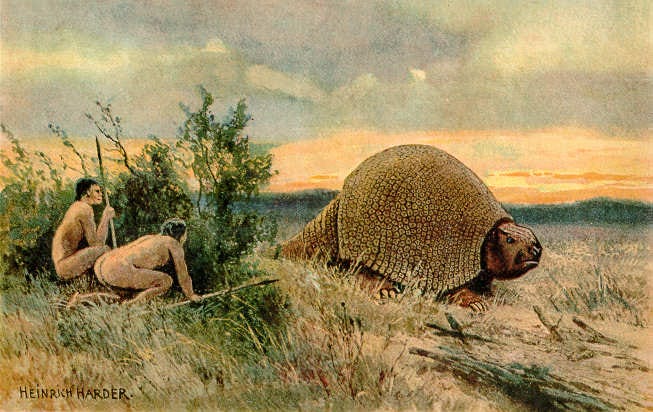
History can be measured in many ways, and told with many stories.
Here are three of those stories, for comparison’s sake.
“Technological evolution.”
We’ve gone from fastening sharp rocks on sticks to building combustion engines, to making space ships and sexy LCD screens and microprocessors.
It’s easy to bitch about technology and retch at a culture rife with inane advertising for chicken nuggets and pushy AI slop. I’ve done my fair share of kvetching.
But the past is an alien planet I don’t want to live on.
I’m not trading in my air conditioning, or my ability to avoid tuberculosis, or my ability to type words on a screen and share them around the world, anytime soon.
If you could go aback to any prior year, which year would you leap back to? The catch: you’re stuck with all of their technology. You might idealize and romanticize the 1990s or the 1920s. Many do. Okay, but are you ready to give up your thin laptop, your Substack, your iPhone? What about antibiotics? Enjoy your Sublime albums on CD! Or your gangrene!
“Cultural evolution.”
We’ve gone from societies—thousands of years ago—where violence, slavery, and conquering and pillaging were completely normal and universal, to societies where these things are not the norm.
The society I live in has some serious problems, without question, but it’s also a society with a presumption that I cannot just impale my neighbor with a spear when he annoys me. That’s a good presumption.
There are places and times where that presumption fails, and those are sad and dark and scary places and times. But the presumption that everyone should be free to live and speak and pursue their own weird little form of happiness is one that I hope we keep for a long time.
“Creator economy” — aka “Democratization of publishing.”
We’ve gone from a world where communication was limited to your tribe of a couple hundred hunter-gatherers, to one where scrolls and eventually printing presses were created. But these things were reserved for kings and nobility and the privileged few.
Imagine living in a world where paper and books were elite privileges. That idea is comically weird.
Most adults alive now can write or create any kind of message for mass consumption: an article, a book, a podcast, a video.
Is that Western-centric? Nope. ITU reports that 74% of the world’s population (~6 billion people) used the internet in 2025.
Anyone can publish what they want online, throw it on Substack, Medium, YouTube, Apple Podcasts, or wherever.
Virtually any adult can make something and share it with the world.
Use a $150 laptop and free wifi from the nearest Starbucks or public library if you have to. The costs and barriers to creating anything are historically low.
Ditto for writing and publishing your book. You can write a book in a free word processor, then sell it on Amazon or Gumroad or your SquareSpace site or a hundred other places.
When I wrote my “The Ultimate Guide to Writing a Humor Piece” eBook, I made it in Google Docs, and exported it to PDF and Kindle format. All for free. It just cost my precious time.
To human beings of past eras, this would all be pretty insane.
Part of my point here is an appreciation for how cosmically cool it is that we get to do this online writing at all.
You write whatever story, joke, or wacky idea you please, and you post it for the world to see.
The Kings and Emperors of yore would have envied us for that.
Regardless of whatever flying cars or cancer-destroying nanobots appear in the future (fingers crossed), I feel grateful now that I can write my fictions, not be impaled with a spear for it, and post it for the world to see.
If I don’t feel gratitude for that, that is truly my mistake.
The writer Eric Hoffer said that the hardest arithmetic to master is the one that enables us to count our blessings.
So here’s a +1 blessing to being able to write and publish at all.